

Running Event Checklist for Success: A Complete Guide
Over 80 percent of running event planners cite clear goal setting as the key to a successful race. Whether you are dreaming of a competitive marathon, a fun run for charity, or a fitness challenge for your community, defining your objectives is the foundation for every decision that follows. This guide walks you through each step so you can organize a memorable event with confidence, clarity, and the right planning essentials.
Table of Contents
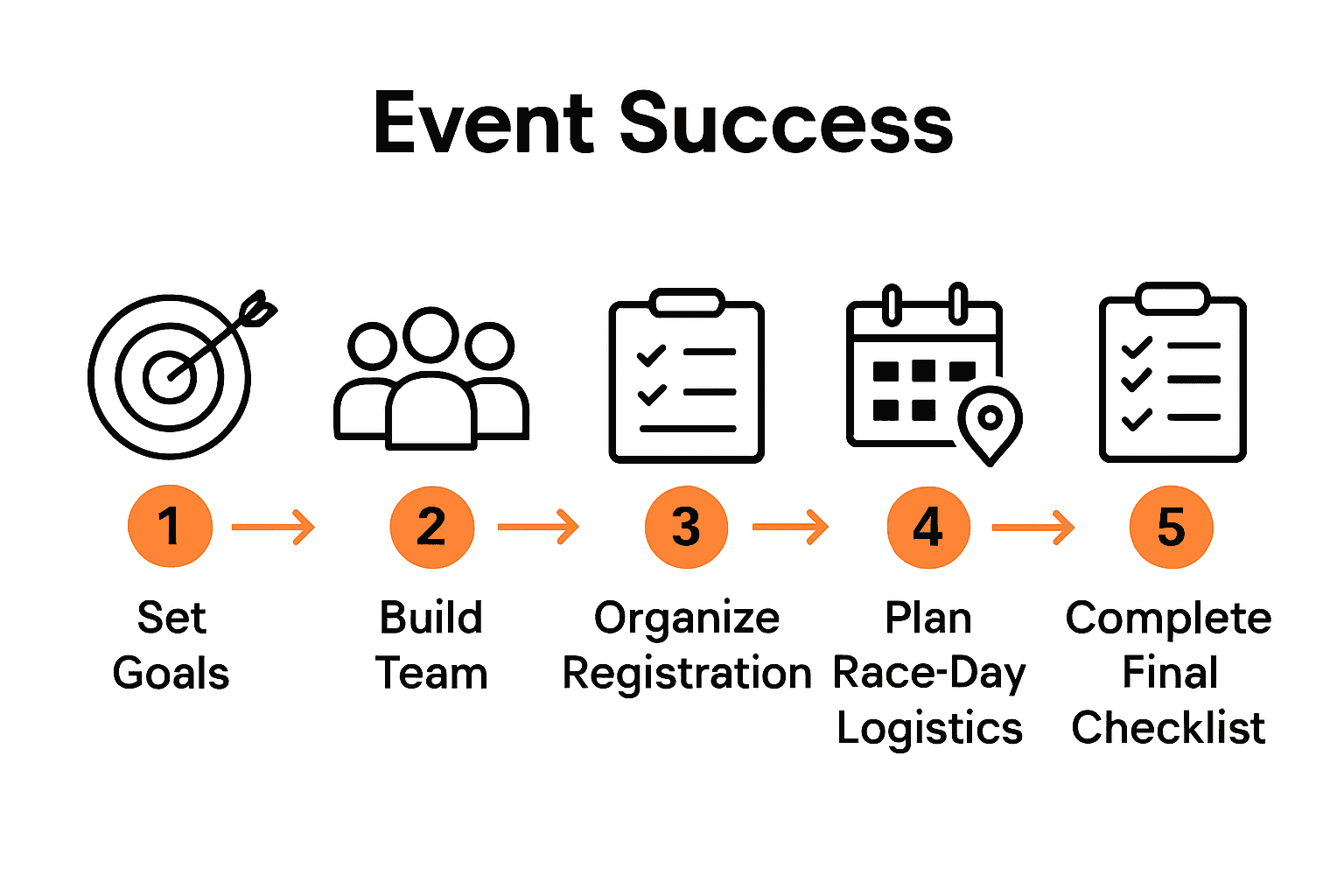
- Step 1: Define Event Goals And Key Details
- Step 2: Assemble Your Event Logistics And Team
- Step 3: Organize Registration And Participant Needs
- Step 4: Coordinate Race-Day Setup And Supplies
- Step 5: Verify Checklist Completion And Event Readiness
Quick Summary
| Key Point | Explanation |
|---|---|
| 1. Define clear event goals | Establish specific outcomes to guide planning and execution of the event effectively. |
| 2. Build a dedicated event team | Assign roles to volunteers and personnel to manage various logistics and ensure smooth operations. |
| 3. Create an efficient registration system | Use an online platform for user-friendly sign-ups and manage participant information effectively. |
| 4. Plan detailed race-day logistics | Develop a comprehensive setup checklist to coordinate race day supplies and activities seamlessly. |
| 5. Conduct thorough pre-event reviews | Perform final checks with the team to verify all details and prepare for any unexpected challenges. |
 |
|
Step 1: Define event goals and key details
Successfully planning a running event starts with crystal clear goals that guide every subsequent decision. According to kvcc, establishing your event’s core objectives is the foundational step that determines your entire planning strategy.
Begin by asking yourself critical questions about your running event. What specific outcomes do you want to achieve? Are you organizing a competitive race, a charity fundraiser, a community fitness challenge, or a training group event? Your goals might include raising money for a cause, promoting community fitness, providing a competitive platform for runners, or simply creating a memorable athletic experience. UCLA Events recommends ensuring your event aligns with your broader mission and represents the most appropriate method to reach your desired outcomes.
To crystallize your event goals, break them down into measurable components. Consider factors like expected participant numbers, target demographic, potential fundraising targets, anticipated participant skill levels, and the overall impact you want to create. A well defined goal transforms from a vague aspiration into a strategic roadmap that will inform everything from marketing to logistics. Pro tip: write down your goals in specific, quantifiable terms that allow you to track progress and success after the event concludes.
Next up, you’ll start mapping out the specific details that will bring your running event vision to life.
Step 2: Assemble your event logistics and team
Building a strong team is the backbone of any successful running event. According to Friends of MACC, effective event coordination requires a collaborative approach with volunteers who can manage various critical aspects of event planning and execution.
Start by identifying key roles that will ensure your running event runs smoothly. WAGGGS recommends designating specific team members for core responsibilities such as project management, communications, logistics, and partnerships. Your core team might include a race director responsible for overall event strategy, a volunteer coordinator to manage staffing, a marketing specialist to handle promotions, a registration manager to track participants, and a logistics expert to handle route planning and technical details.
When recruiting your team, look for passionate runners and event enthusiasts who bring diverse skills and genuine commitment. Consider reaching out to local running clubs, fitness centers, and community sports networks to find motivated volunteers. Ensure each team member understands their specific responsibilities and how they contribute to the event’s success. Hold regular planning meetings to maintain clear communication and track progress toward your event goals.
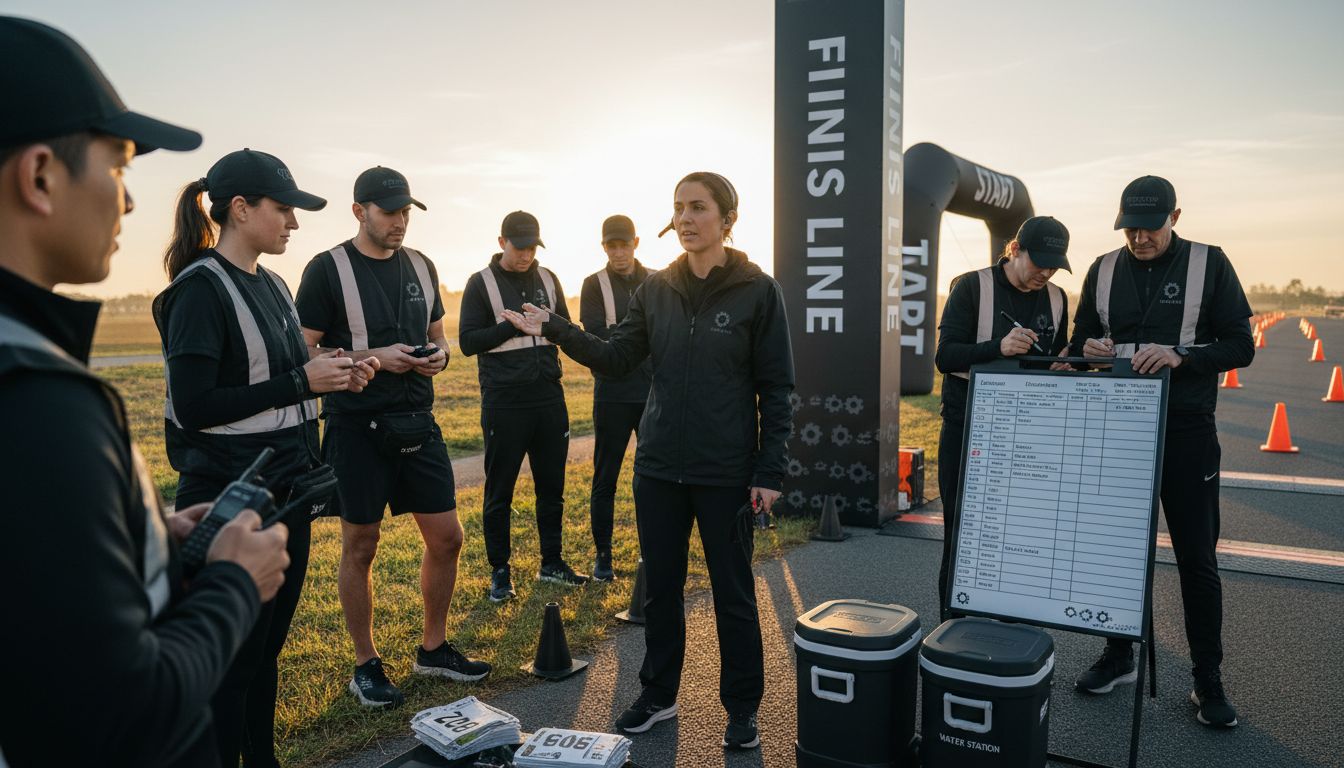 Pro tip: Create a shared digital workspace where team members can collaborate, share documents, and stay updated on planning progress.
With your team assembled, you are now ready to dive into the detailed planning and execution of your running event.
Step 3: Organize registration and participant needs
Creating a smooth registration process is crucial for setting the tone of your running event and ensuring participant satisfaction. According to Purpose Built Communities, finalizing registration details and preparing participant materials are key elements in executing a successful event.
Design a comprehensive registration system that captures all necessary participant information while being user friendly. Consider developing an online platform that allows runners to easily sign up, select their race category, provide emergency contact details, and complete payment. Your registration process should include options for different race distances, age groups, and any special categories like team registrations or charity runners. Events and Festivals emphasizes the importance of collecting data that helps you understand and meet participant needs more effectively.
Pay special attention to participant requirements beyond basic registration.
With registration systems in place, you are now prepared to move forward with more detailed event planning.
Step 4: Coordinate race-day setup and supplies
Setting up a seamless race day requires meticulous planning and strategic organization. European Athletics highlights the critical importance of a dedicated logistics team to manage all essential services and operational details for a successful event.
Start by creating a comprehensive race day setup checklist that covers every critical element. This includes preparing start and finish line areas, setting up clear signage, arranging water stations, establishing medical support zones, and creating designated areas for gear check and post race recovery. Your logistics team should arrive early to coordinate equipment placement and ensure everything is precisely positioned. Pay special attention to creating safe and accessible routes for runners, with clear markings for different race categories and potential alternative paths.
Ensure you have redundant systems for critical race day supplies. This means having backup equipment for timing systems, extra water and nutrition supplies, additional first aid materials, and communication devices. Pro tip: Create a detailed inventory spreadsheet tracking every piece of equipment and designate specific team members responsible for each area of setup and management. Marathon-Ready Gear Guide can help you understand the essential equipment needed for a professional running event.
With your race day logistics carefully orchestrated, you are now prepared to welcome participants and execute a smooth running event.
Step 5: Verify checklist completion and event readiness
The final stage of event preparation demands a systematic and thorough review of every single detail. According to KVCC, having a comprehensive timeline and detailed checklist is crucial for ensuring all aspects of your running event are fully addressed from preparation through execution.
Conduct a comprehensive final walkthrough with your entire event team one week before the race. This review should include a line-by-line verification of all critical elements such as registration systems, route markings, equipment readiness, volunteer assignments, emergency protocols, and communication channels. Les Roches emphasizes the importance of a step-by-step approach to confirm that every single component aligns with your original event purpose and goals. Create a master checklist that allows each team member to sign off on their specific responsibilities and confirm all required tasks are completed.
Establish a contingency plan for potential last minute challenges. This means having backup solutions for scenarios like unexpected weather changes, equipment failures, or sudden participant registration shifts. Pro tip: Schedule a final team briefing 48 hours before the event where everyone reviews their roles and potential emergency responses. Ensure all team members have updated contact information and understand the communication protocols for managing unexpected situations.
With your comprehensive review complete, you are now ready to welcome runners and execute a professionally managed event.
Gear Up for Success With the Right Running Apparel and Accessories
Planning a running event comes with challenges like flawless logistics, participant satisfaction, and race-day readiness. This guide highlights the importance of clear goals, strong team coordination, and comprehensive checklists to create an unforgettable running experience. To perform your best and inspire your runners, you need gear that combines innovation with comfort and style. Our collection S25 is designed with both professionals and amateurs in mind, offering technical apparel and accessories breaking beyond traditional sportswear standards.
Step into your next event fully prepared and confident by choosing equipment tested by running communities and crafted to support endurance, flexibility, and performance. Visit Enthst.com now to explore our unique products that elevate your running experience while matching the organizational excellence your event demands. Don’t wait — make your running event not just successful on paper but unforgettable in every stride.
Frequently Asked Questions
How do I define goals for my running event?
Start by identifying specific outcomes you want to achieve, such as raising funds, promoting fitness, or offering competitive races. Write down your goals in measurable terms, allowing you to track progress and success after the event.
What are essential logistics to coordinate for race day?
Manage critical elements like start and finish line setups, water stations, medical support zones, and signage. Create a detailed checklist to ensure all logistical aspects are covered before the event begins.
How can I ensure smooth participant registration?
Develop a user-friendly online registration platform that captures necessary information and allows for different race categories. Provide a comprehensive information packet that includes race day details to enhance participant experience.
What roles should I assign to my event team?
Designate key responsibilities based on critical areas like project management, logistics, and communication. Recruit volunteers who are passionate about running and ensure they understand their roles to maximize effectiveness.
How can I prepare for unexpected challenges on race day?
Establish a contingency plan that accounts for potential issues like bad weather or equipment failure. Schedule a final team briefing 48 hours before the event to review emergency responses and ensure clear communication protocols are in place.
What should I include in my final checklist before the event?
Conduct a detailed walkthrough that verifies registration systems, route markings, and equipment readiness. Use a master checklist to ensure every team member confirms their responsibilities are completed.