

Materials Guide for Runners: Choose the Best Fabrics
Selecting the right running materials can make or break your training success. With over 60 percent of runners reporting discomfort linked to poor fabric choices, finding what suits your body and environment is more than just a matter of style. Understanding your true performance needs and comparing the latest technical fabrics can help you unlock greater comfort, durability, and confidence every time you hit the pavement.
Table of Contents
- Step 1: Identify Essential Performance Needs
- Step 2: Compare Leading Technical Fabrics
- Step 3: Evaluate Material Durability and Comfort
- Step 4: Test Fabrics in Real Running Conditions
- Step 5: Verify Long-Term Performance and Care
Quick Summary
| Key Point | Explanation |
|---|---|
| 1. Identify your performance needs | Assess your running environment, intensity, and preferences to select suitable materials for better performance. |
| 2. Compare technical fabrics carefully | Evaluate properties like durability and moisture management in polyester, spandex, and natural fibers to match your running style. |
| 3. Test materials in real conditions | Validate fabric performance by running under various conditions to check comfort and moisture management. |
| 4. Maintain your running gear properly | Use cold water and mild detergents to care for technical fabrics, ensuring longevity and continued performance. |
| 5. Inspect for wear regularly | Routinely check running apparel for damage or reduced functionality to ensure optimal performance during runs. |
Step 1: Identify Essential Performance Needs
When selecting running materials, understanding your unique performance needs is the foundational first step to creating a comfortable and effective running experience. According to runvan.org, runners must prioritize clothing that ensures comfort, enables easy movement, and helps regulate body temperature.
To identify your specific performance needs, start by analyzing your running environment and personal preferences. Consider factors like climate, running intensity, and typical workout duration. The Sport Journal highlights that properly fitting athletic clothing can dramatically impact your psychological state and physical performance. Ask yourself key questions: Do you run in hot or cold conditions? Are you a sprinter or long distance runner? Will you be on trails or pavements?
Your performance needs will vary based on these factors. For instance, trail runners might need more durable and moisture resistant fabrics, while track runners could prioritize lightweight breathable materials. The goal is creating a personalized performance toolkit that supports your unique running style and environmental challenges. By carefully assessing your specific requirements, you set the stage for selecting materials that enhance rather than hinder your running potential.
Step 2: Compare Leading Technical Fabrics
Comparing technical fabrics is crucial to finding the right running material that matches your performance needs. According to texas4-h, technical fabrics like polyester, spandex, and emerging materials such as bamboo offer distinct performance characteristics that can significantly impact your running experience.
Start by evaluating the key properties of each fabric. Polyester stands out for its durability and moisture-wicking capabilities. Spandex provides exceptional elasticity, allowing your clothing to move with your body. SNS Courseware highlights additional options like natural fibers such as wool and cotton, as well as synthetic fibers including nylon. Each material brings unique advantages depending on your specific running conditions.
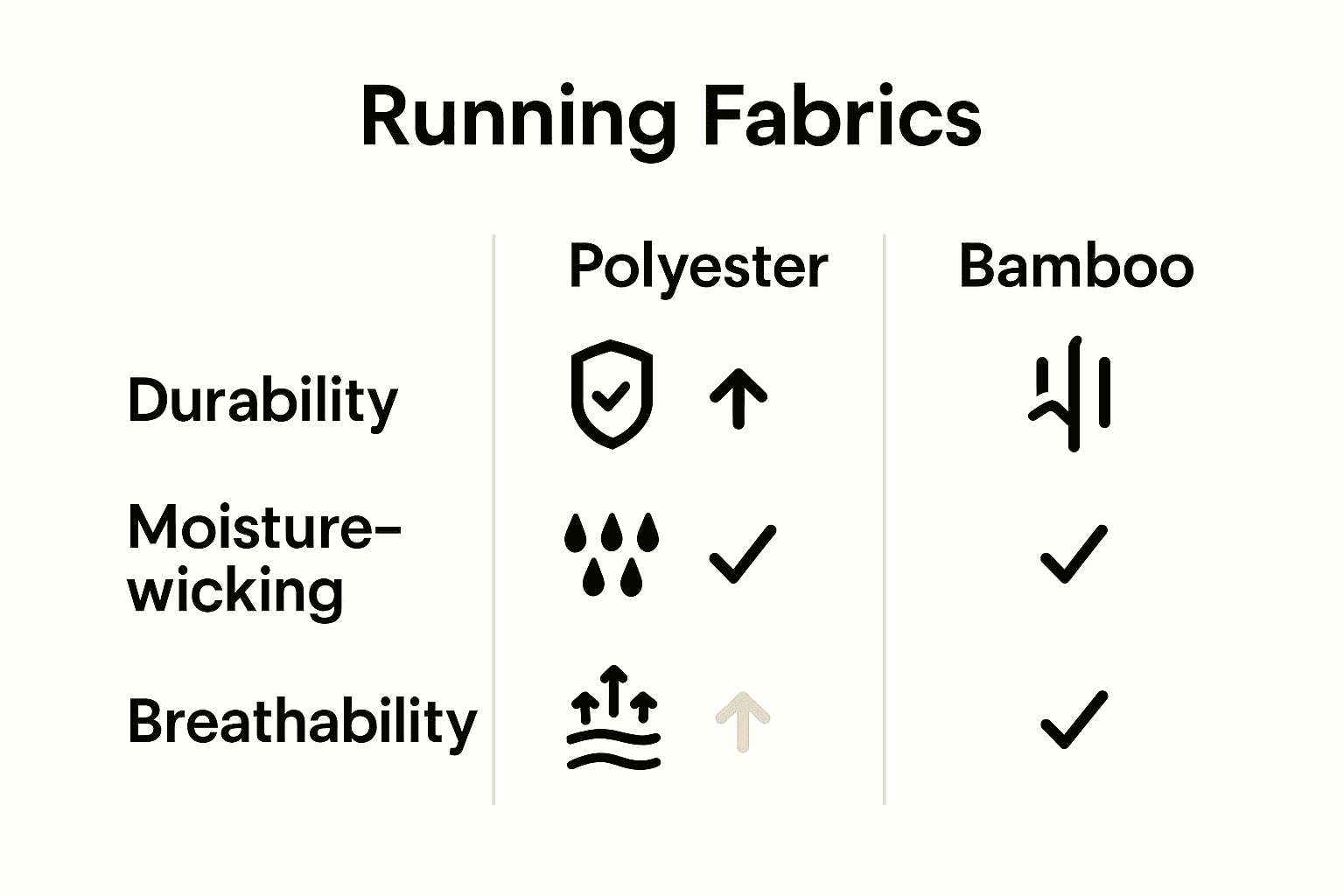
To make an informed choice, consider your primary running environment and performance goals. A trail runner might prioritize durability and moisture resistance, while a track runner could focus on lightweight breathability. Check how each fabric performs in temperature regulation, sweat management, and overall comfort. Remember that sometimes a blend of materials can provide the best overall performance.
 By methodically comparing these technical fabrics, you will discover the optimal material that enhances your running performance and comfort.
Learn more about technical running apparel in our complete guide to technical shirts.
Step 3: Evaluate Material Durability and Comfort
Evaluating the durability and comfort of running materials is a critical step in selecting the right performance apparel. TeachEngineering emphasizes the importance of understanding how different fabric characteristics directly impact clothing performance and wearer comfort.
Start by conducting a hands-on assessment of potential materials. Stretch the fabric and observe its recovery. Rub the material between your fingers to test its texture and potential for chafing. Chemical Journal highlights that breathability is crucial. Look for fabrics that balance wind resistance with moisture transfer. This means checking how quickly the material wicks sweat and allows air circulation.
Pay special attention to the fabric weight and weave. Lighter fabrics with strategic ventilation work best for high intensity running, while slightly denser materials provide better protection in cooler conditions. Test the fabric against your skin to ensure it feels comfortable during movement. Remember that a perfect running material should feel almost unnoticeable while running adaptable to your body and environmental conditions.
Learn more about running apparel details in our running apparel terminology guide.
Step 4: Test Fabrics in Real Running Conditions
Testing running fabrics in authentic conditions is the ultimate way to validate their performance and comfort. American Ceramic Society research highlights how cutting edge materials are evaluated through real world application, ensuring runners get the most advanced performance gear possible.
Create a systematic testing protocol that mimics your typical running environment. For trail runners, this means testing on varied terrain with elevation changes. Road runners should simulate different speeds and distances. Pay attention to how the fabric responds during intense activity challenging your body temperature regulation. Check for areas of potential friction or chafing. Observe how quickly the material dries after sweating and whether it maintains its shape and structural integrity throughout your run.
Consider running in different weather conditions to truly understand the fabric versatility. A perfect running material should feel comfortable whether you are sprinting on a cool morning or pushing through a humid afternoon workout. Take notes on your experience tracking aspects like moisture management, breathability, and overall comfort. Your personal experience will reveal more about a fabric performance than any laboratory test.
Learn more about running apparel details in our running apparel terminology guide.
Step 5: Verify Long-Term Performance and Care
Verifying the long-term performance of your running materials requires a strategic approach to maintenance and care. Textile Institute research emphasizes the critical role of proper fabric care in maintaining the functionality and performance of high-tech running gear over extended periods.
Develop a consistent care routine that preserves the technical properties of your running apparel. Wash performance fabrics in cold water using mild detergents specifically designed for technical clothing. Avoid fabric softeners and bleach, which can break down the material’s performance characteristics. American Manufacturing highlights that some advanced fabrics feature permanent moisture-wicking and antimicrobial technologies that require special attention to maintain their effectiveness.
Regularly inspect your running gear for signs of wear. Check for fabric thinning, loss of elasticity, or reduced moisture-wicking capabilities. Store your technical clothing flat or hung loosely to prevent stretching and maintain the fabric’s structural integrity. Consider rotating between multiple running outfits to reduce wear on any single piece of clothing. Remember that proper care can significantly extend the life of your performance apparel, ensuring you get maximum value and consistent performance from your running materials.
Learn more about maintaining your running gear in our running apparel terminology guide.
Discover Running Apparel That Matches Your Performance Needs
Choosing the right fabric is the key challenge for every runner who wants to boost comfort and performance. After learning how to evaluate technical materials for breathability, durability, and fit, you deserve gear designed to support your unique style and environment. At Enthst, we blend cutting-edge technical solutions with streetwear style to create running apparel that stands out and performs under pressure.
Explore our collection S25 | Enthst.com to experience apparel tested and refined with both professionals and everyday runners. Our innovative materials undergo real-world trials just like you, offering you comfort without compromise. Don’t settle for standard gear when you can choose pieces that adapt, endure, and elevate your run. Visit enthst.com today and discover accessories too at enthst accessories that enhance your running experience. Take the first step to gear that truly supports your run right now.
Frequently Asked Questions
How do I identify my essential performance needs for running fabrics?
Start by assessing your running environment, personal preferences, and factors like climate, intensity, and duration. Make a list of these considerations to help guide your fabric selections effectively.
What are the key properties to compare when evaluating technical fabrics for running?
Focus on durability, moisture-wicking capabilities, elasticity, and breathability. Prioritize fabrics that align with your running conditions, such as polyester for durability or spandex for elasticity, to enhance your running experience.
How can I test the comfort and durability of running materials?
Conduct a hands-on assessment by stretching the fabric and checking its recovery, texture, and breathability. Test fabrics against your skin to ensure they feel comfortable during movement, and document your findings for future reference.
What steps should I take to maintain my running apparel for long-term performance?
Develop a consistent care routine, such as washing in cold water with mild detergents and avoiding fabric softeners. Regularly inspect your gear for wear and store it properly to extend its life and maintain its performance features.
How do different weather conditions affect the choice of running materials?
Consider how fabrics react to various weather conditions, such as moisture management in humid weather or insulation in cold temperatures. Test materials in these different conditions to find the best options that suit your specific running scenarios.
Can I combine different fabrics in my running apparel?
Yes, using a blend of materials can provide optimal performance for various needs, such as combining moisture-wicking fabrics with breathable ones. Experiment with different fabric combinations to achieve the best fit for your running style and conditions.